

Pop culture gives us a red-skinned villain with horns and a pitchfork. The biblically accurate Lucifer described in Scripture looks almost nothing like that. Somewhere between medieval art, Renaissance poetry, and modern film, the actual text got buried under centuries of imagination.
This article sets the myths aside and goes straight to Isaiah, Ezekiel, and the original Hebrew, to show what the biblically accurate Lucifer really is.
Biblically Accurate Understanding of Lucifer’s Identity
Before appearance or fall, identity comes first. A biblically accurate Lucifer study starts by separating tradition from text.
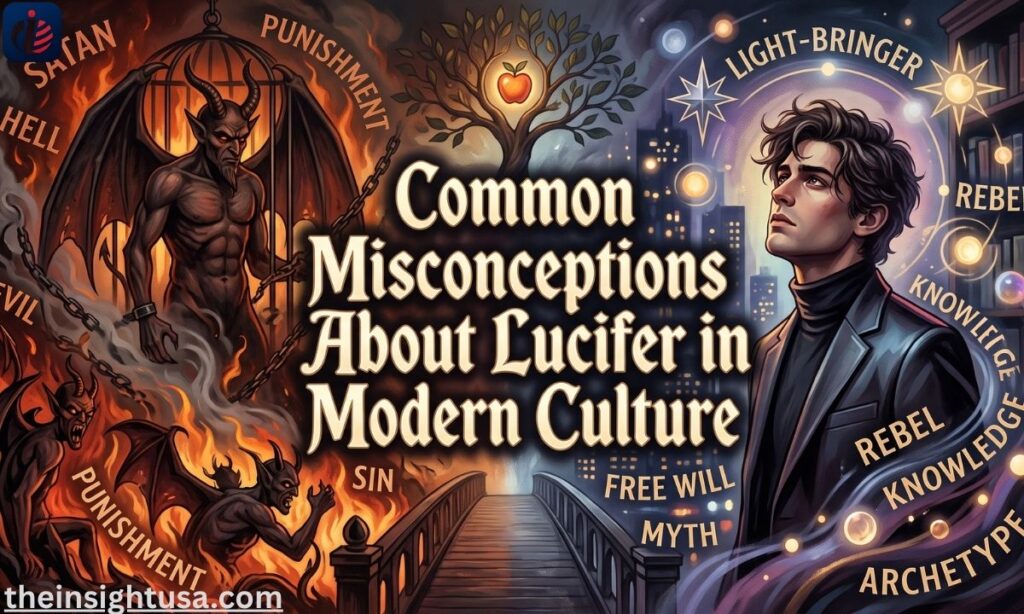
Common Misconceptions About Lucifer in Modern Culture
Most assumptions about Lucifer never actually appear in Scripture:
- Lucifer is used throughout the Bible as Satan’s proper name
- His appearance is red-skinned, horned, and monstrous
- He currently reigns as king of hell
- He has always been evil, from creation onward
- Lucifer and the Genesis serpent are explicitly the same figure
None of these hold up under close reading. The biblically accurate Lucifer is built from the text, not from repeated tradition.
What Scripture Actually Reveals About Lucifer
“Lucifer” appears exactly once in most English Bibles Isaiah 14:12 (KJV), addressed to the fallen king of Babylon and called “son of the morning.” Everything else in the biblically accurate Lucifer story the name, the fall narrative, the imagery comes from later interpretation layered onto this verse and onto Ezekiel 28.
The biblically accurate Lucifer picture rests on surprisingly thin direct evidence two passages, read through centuries of theology.
The Hebrew Original: Helel and Its True Meaning
The Hebrew word behind “Lucifer” is helel, meaning “shining one.” The full phrase, helel ben shachar, means “shining one, son of the dawn” poetic language for brightness, not evil.
This matters: the biblically accurate Lucifer of Hebrew Scripture is radiance, not redness light, not horns.
Jerome’s Latin Vulgate and the Birth of ‘Lucifer’
Jerome rendered helel as lucifer, Latin for “light-bringer” an accurate translation, not a theological claim. English translators later kept the Latin word rather than translating its meaning, and “shining one” hardened into a proper name, burying the biblically accurate Lucifer of the Hebrew text under translation history.
Biblically Accurate Description of Lucifer’s Appearance
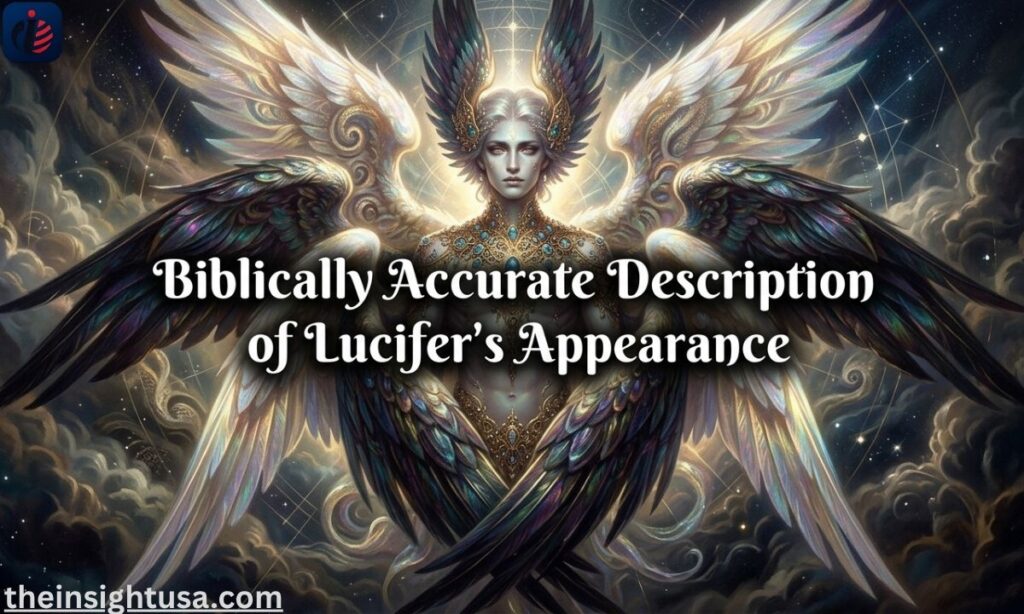
The biblically accurate Lucifer appearance has nothing to do with the horror-movie devil.
Lucifer’s Pre-Fall Glory According to Ezekiel
Ezekiel 28:12-17, formally addressed to the king of Tyre, gives the most detailed description. Verse 12 calls him “the seal of perfection, full of wisdom and perfect in beauty.” Verse 13 describes precious stones set in gold.
| Ezekiel 28 Description | What It Suggests |
| “Seal of perfection” | Flawless craftsmanship |
| “Full of wisdom” | Exceptional intelligence |
| “Perfect in beauty” | Unmatched glory |
| Covered in nine precious stones | Radiant, jewel-like form |
| “Anointed cherub that covereth” | A high-ranking guardian role |
| Walked “in the midst of the stones of fire” | Direct access to God’s presence |
This is the core of any biblically accurate Lucifer appearance: light and jewels, not the grotesque image most people picture.
The Morning Star Imagery in Isaiah’s Prophecy
Isaiah 14:12 adds the “morning star” title, tied to Venus, brightest object in the pre-dawn sky bright enough to outshine nearly everything, yet still brought down. The biblically accurate Lucifer profile stays consistent: elevated radiance, not darkness.
Does Lucifer Possess Physical Form After His Fall?
Scripture never describes a post-fall appearance. No red skin, no horns, no tail, no pitchfork. 2 Corinthians 11:14 even notes Satan can appear “as an angel of light” still capable of presenting glory, not obvious monstrosity.
What Biblical Silence Tells Us Lucifer Is Not
Scripture never assigns red skin, horns, a pitchfork, bat-like wings, or a throne ruling hell as king. None of that is biblically accurate Lucifer imagery it’s cultural invention over a sparser text.
The fall of Lucifer in the Bible
Isaiah 14:12-15 pictures a being who resolved to ascend above God, only to be “brought down to hell, to the sides of the pit.” Ezekiel 28:15-17 adds that “iniquity was found” in him and his heart “was lifted up because of thy beauty” before he was cast down as a warning.
Together, these passages give the fall of Lucifer in the Bible its shape: a glorified being whose pride led to expulsion. The biblically accurate Lucifer narrative centers on pride as the cause, not random evil as an origin.
Read More: Biblical Meaning of the Name Olivia: Peace, Anointing & Divine Purpose
Critical Distinction Between Lucifer and Satan in Scripture
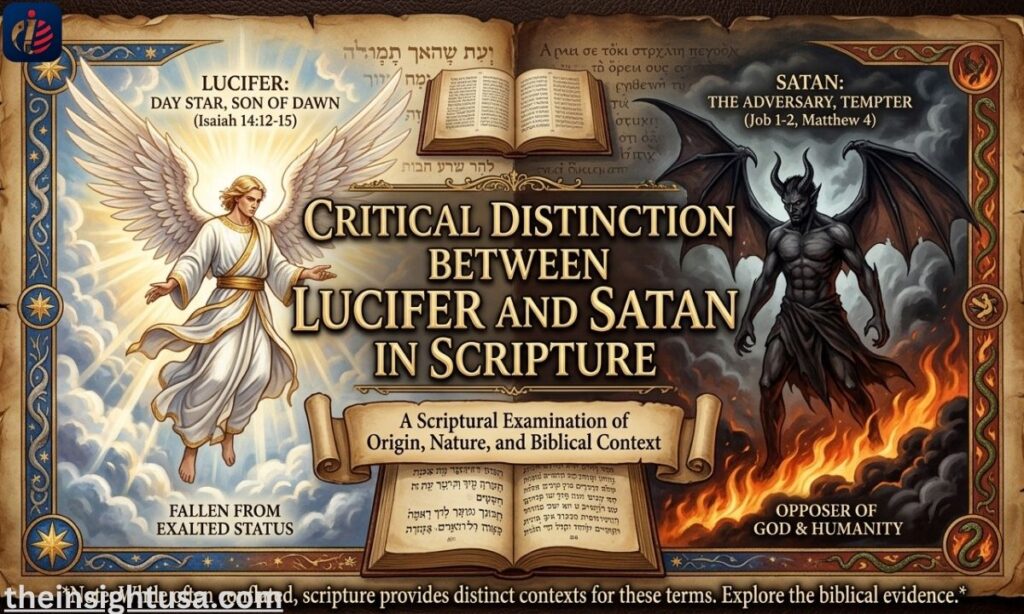
One of the most overlooked points here: Scripture never explicitly states that Lucifer and Satan are the same being.
Biblical Evidence Supporting Their Distinction
In the Hebrew Bible, “the satan” usually functions as a title “the accuser” rather than a personal name. Job 1:6-12 and Zechariah 3:1-2 show “the satan” appearing before God’s council, testing and accusing, a different function than the prideful cherub of Ezekiel 28 associated with the biblically accurate Lucifer.
How Christian Tradition Merged These Figures
Origen, in the third century, began reading Isaiah 14 and Ezekiel 28 as Satan’s own fall rather than condemnations of human kings. Medieval theology solidified this by weaving Isaiah 14, Ezekiel 28, and Revelation 12:7-9 into one story, later absorbed as settled doctrine.
Protestant Reformers’ Rejection of the Equation
Reformers like Calvin and Luther were cautious about equating the two figures outright, separating what the text clearly states from what tradition assumed. Many modern scholars share that caution today.
Why This Theological Distinction Matters Today
The biblically accurate Lucifer discussion has to separate what the text states from what tradition assumed otherwise interpretation gets mistaken for revelation.
Lucifer biblically accurate appearance
In short: the Lucifer biblically accurate appearance is radiant light, jeweled covering, and angelic majesty not the horned, red-skinned figure of folklore. Scripture describes beauty corrupted by pride, not ugliness assigned as punishment.
Biblically Accurate Account of Lucifer’s Fall and Significance
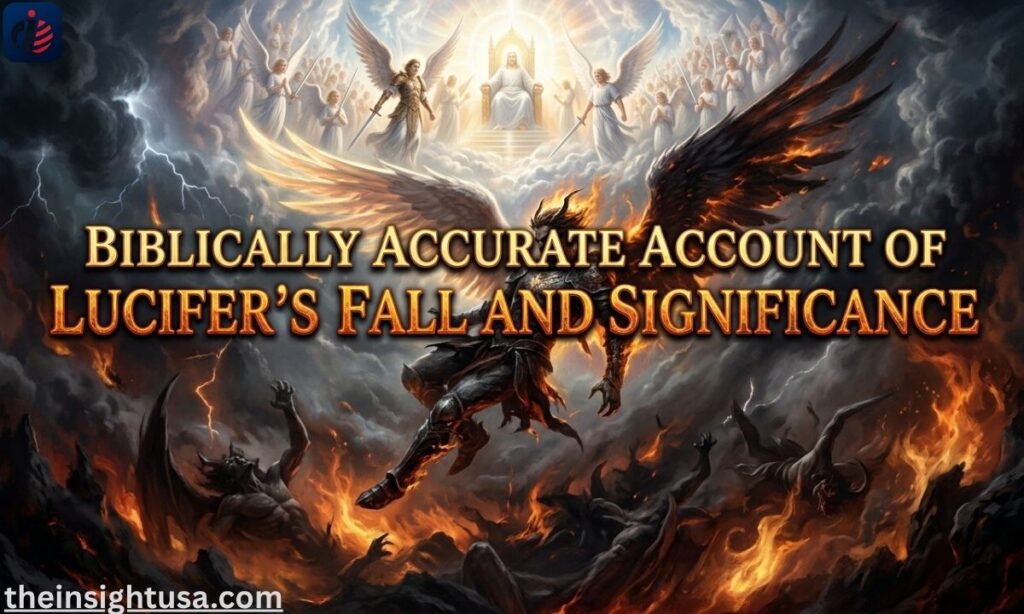
Beyond appearance and identity, the deeper value of a biblically accurate Lucifer study is what the fall actually teaches.
The Narrative of the Fallen Angel in Scripture
The wider storyline behind the biblically accurate Lucifer an exalted angel rebelling and cast down draws from Isaiah 14, Ezekiel 28, and Revelation 12, which describes a war in heaven and a dragon “cast out into the earth.” Together these form the backbone of the fallen-angel tradition, though each was written in a different context.
Lucifer’s Five ‘I Will’ Declarations of Pride
Isaiah 14:13-14 records five escalating, self-exalting statements:
- “I will ascend into heaven”
- “I will exalt my throne above the stars of God”
- “I will sit also upon the mount of the congregation”
- “I will ascend above the heights of the clouds”
- “I will be like the most High”
Each line pushes the same theme further: a created being seeking to replace, not serve, his Creator.
The Nature of Sin: Pride in God-Given Perfection
Ezekiel 28:17 states plainly, “thine heart was lifted up because of thy beauty.” The sin described isn’t external corruption it’s pride rooted in gifts that were originally good. That’s central to any biblically accurate Lucifer lesson: gratitude turning into self-worship.
Catastrophic Consequences of Angelic Rebellion
The result was total: expulsion, loss of status, and judgment no comfortable throne in hell, only downfall.
The Scope of Rebellion: One-Third of Angels
Revelation 12:4 is often read as “a third part of the stars of heaven” cast down alongside the dragon connected by many interpreters to a third of the angels joining the rebellion, though the reading is debated.
Artistic Evolution of Lucifer’s Image Throughout History
Art didn’t invent this figure from nothing it took a handful of verses and ran in very different directions over time.
Early Medieval Period: The Ethereal Blue Angel
Early medieval art portrayed a beautiful, blue-toned angel closer, ironically, to the biblically accurate Lucifer of Ezekiel 28 than any later depiction.
High Medieval Transformation to Grotesque Forms
By the late Middle Ages, artists shifted toward monstrous, clawed figures shaped by folklore rather than Scripture.
Renaissance Romanticization: Milton’s Tragic Rebel
Milton’s Paradise Lost (1667) reimagined him as a charismatic, tragic antihero a landmark of literature, but poetic imagination, not biblical exegesis.
Victorian Era Through Modern: The Theatrical Red Devil
Victorian theatre cemented the red-skinned, horned image still common today a stage costume, not Scripture.
Contrasts Between Artistic and Biblical Portrayals
| Popular Depiction | Biblical Text |
| Red skin | No color assigned |
| Horns | Not mentioned |
| Pitchfork | No weapon described |
| Rules hell as king | Cast down, awaiting judgment |
| Always grotesque | Originally “perfect in beauty” |
This gap is exactly why so many people search for the biblically accurate Lucifer in the first place.
Theological Insights from a Biblically Accurate Lucifer
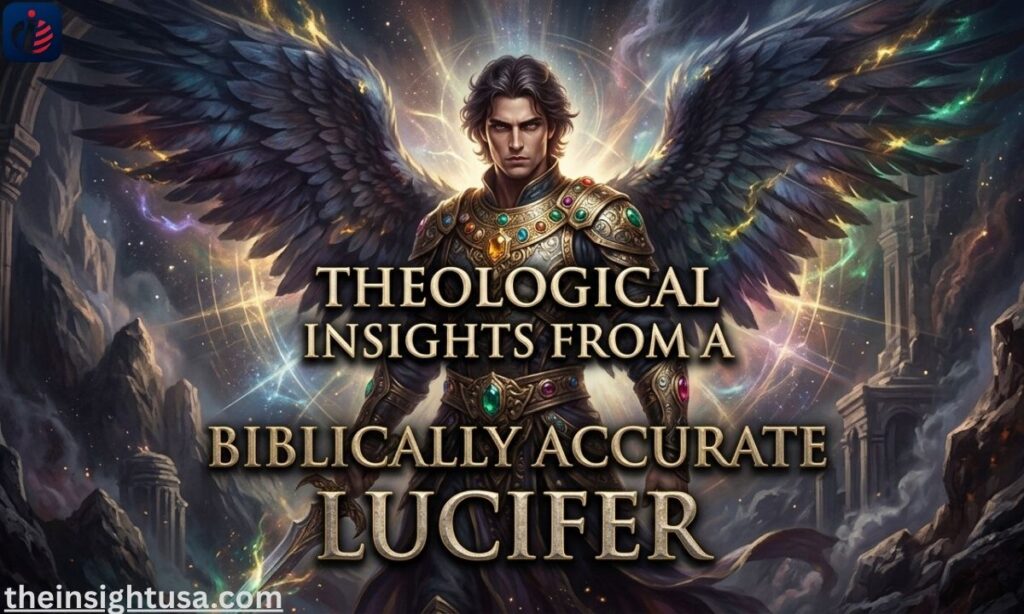
Beyond history and imagery, this story carries theological weight that still applies today.
The Paradox of Created Perfection and Free Will
A being described as flawless still chose rebellion a paradox at the heart of the biblically accurate Lucifer story, echoing the same freedom given humanity in Eden.
The Origin of Evil Within a Perfect Being
Ezekiel 28:15 says he was “perfect in thy ways from the day that thou wast created, till iniquity was found in thee.” Evil isn’t an eternal force equal to God here it originates as a choice inside a created being.
Pride’s Specific Temptation: Giftedness and Position
The temptation wasn’t weakness it was excess. Beauty, wisdom, and status became the very things that corrupted him: a warning about gifts unchecked by humility.
Cosmic Implications: Corrupting Others and Spiritual Warfare
Revelation’s image of a dragon dragging a third of the stars down with him suggests influence beyond one individual a rebellion that spread, shaping the broader biblical picture of spiritual warfare tied to the biblically accurate Lucifer account.
Lessons for Humanity: Humility and Dependence on God
Whatever the exact identity behind the text, the moral of the biblically accurate Lucifer stays consistent: pride in one’s own brilliance leads to downfall, while humility and dependence on God is the path Scripture recommends.
Frequently Asked Questions
Is Lucifer named in the original Hebrew Bible?
No. The Hebrew uses helel, “shining one.” The biblically accurate Lucifer name comes from Jerome’s Latin, not Hebrew.
Does the Bible describe red skin and horns?
No. The biblically accurate Lucifer is radiant light and jeweled beauty never red skin, horns, or a pitchfork.
Are Lucifer and Satan the same being?
The Bible never explicitly equates them; the link developed through later tradition.
What is his role in Ezekiel 28?
An “anointed cherub” a guardian of extraordinary beauty and wisdom before the fall.
How many angels fell with him?
Revelation 12:4 is often read as a third of the angels, though debated.
Why does Milton differ from the Bible?
Paradise Lost is poetic fiction, adding personality and motive beyond the biblical text.
Conclusion
Strip away the horror-movie costume, and the biblically accurate Lucifer in Scripture looks nothing like popular imagination. He’s described in only a couple of key passages as a being of extraordinary beauty, wisdom, and light not a red-skinned monster with horns and a pitchfork. The name itself came from a Latin translation choice, not the Hebrew original, and his link to Satan is tradition rather than explicit biblical text.
What remains constant across every passage is the lesson, not the legend. The biblically accurate Lucifer story is ultimately a warning about pride corrupting even the most gifted of God’s creation. Reading the actual text instead of centuries of borrowed imagery reminds us that humility, not brilliance or beauty, is what Scripture asks of us in the end.

Henry Collins is a dedicated writer with 4 years of experience creating engaging and informative content.
He specializes in travel, lifestyle, and personal development topics, turning ideas into clear and practical advice.
His writing is well-researched, reader-friendly, and focused on delivering real value.
Henry is passionate about inspiring readers with authentic and meaningful content.